

The Invisible Silhouette: A Guide to Discovering Your Perfume Taste
They want you overwhelmed. In reality, you just need to train your nose.

We’ve managed to overthink perfume.
Between the intimidating scent notes and the niche-brand snobbery, we’ve made the act of buying a bottle feel far more exhausting than it actually is.
If you’ve ever walked into a high-end perfume store or scrolled through fragrance tiktok, you’ve seen the gatekeeping.
You’ll hear people talk about “top notes,” “base notes,” “projections,” “niche houses,” and you hear a sentence like1:
“You need a refined palate to appreciate the "animalic notes" of a $400 bottle of Oud”
It creates this idea that perfume is only for people who really know what they’re doing—collectors, enthusiasts, experts.
But the truth is much simpler.
Smelling good isn’t complicated. It never was. You don’t need to memorise fragrance pyramids or spend hours researching brands. At its core, perfume is just about one thing: finding scents you genuinely enjoy and wearing them well.
The industry benefits from making it feel confusing. The more overwhelmed you are, the more likely you are to rely on price, branding, or someone else’s opinion to decide what smells “good.”
But once you strip all of that away, it becomes very straightforward.
Your nose already knows what you like, you just have to trust it.
Start With What You Already Like
A lot of people think they have no idea what kind of fragrances they like.
That’s not true.
You already have a preference—you just haven’t labelled it yet.
Think about the smells you’re naturally drawn to in your daily life. Is it the crisp, sharp scent of your favourite soap? The warmth of a cedarwood candle in your living room? The smell of the air right after it rains? The sweetness of your favourite caramel candy, or the hint of vanilla in your morning coffee?
That’s your taste showing itself in its simplest form.
Maybe you like clean, fresh scents that smell like you just stepped out of the shower. Maybe you lean towards something sweeter, warmer, or slightly woody. Whatever it is, that’s your entry point.
You don’t need to start from scratch. You just need to pay attention.
Once you recognise what you naturally gravitate towards, finding a good fragrance becomes much easier. Instead of being overwhelmed by hundreds of options, you’re just narrowing in on what already feels familiar.
Perfume isn’t about forcing yourself to like something “expensive” or “complex.” It’s about building from what you already enjoy and refining it over time.
Build Your Nose, Not Your Collection
Once you know what you like, the next step isn’t to start buying, it’s to start smelling.
Most people rush this part.
They go from “I like vanilla” to buying five different vanilla fragrances in a week. That’s how you end up with a shelf full of bottles and no real sense of what actually smells good on you.
The goal isn’t to build a collection. It’s to build your nose.
A simple way to do that is by understanding a few core scent directions. You don’t need to memorise dozens of categories, just recognise the basics: fresh, floral, oriental and woody. Almost every fragrance you’ll come across falls somewhere within or between these.
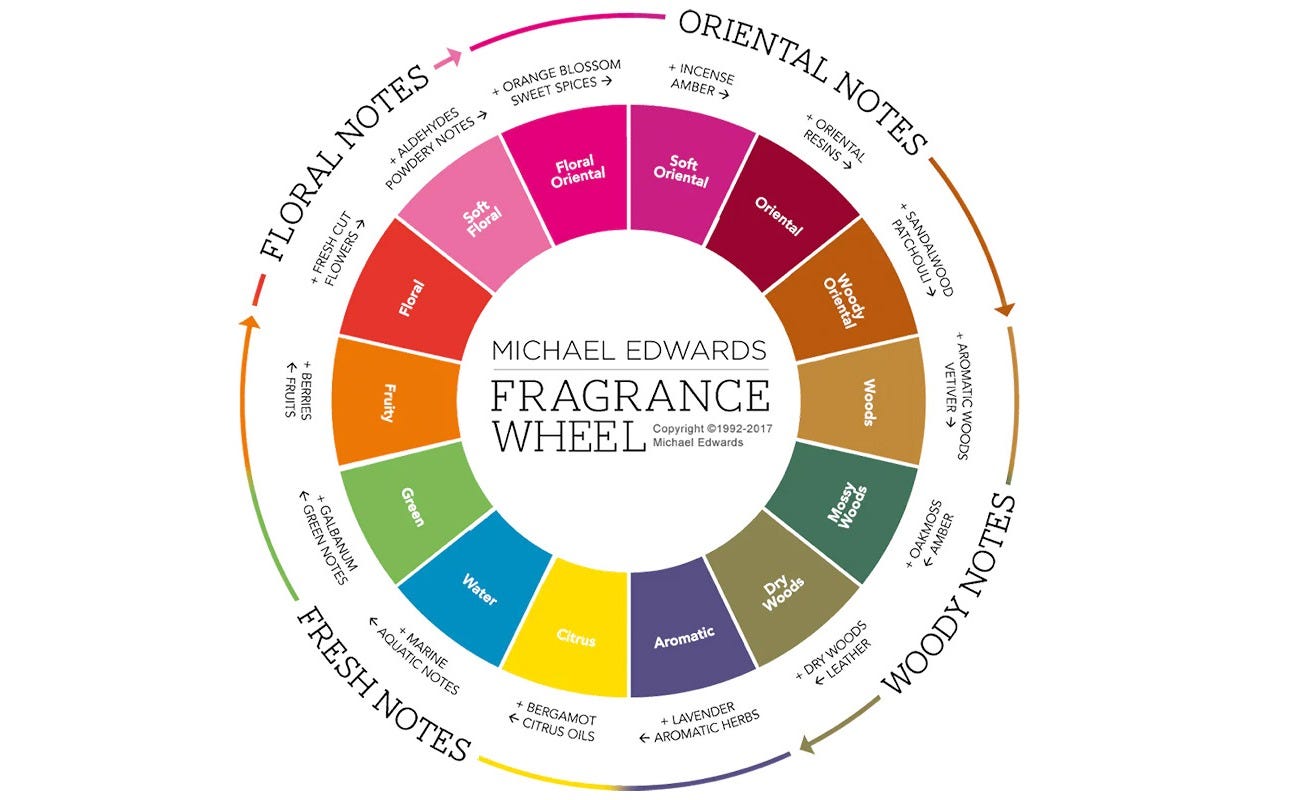
When you start smelling with this in mind, things click faster. You begin to notice patterns. You realise you prefer fresh scents during the day, maybe something warmer at night. You start picking up on details, not because you studied them, but because you’ve experienced them.
So take your time. Go into stores, test on your skin, revisit scents after a few hours. Smell what your friends are wearing. Pay attention to how a fragrance evolves, not just how it smells in the first five seconds.
This is how taste is built. Not through buying more, but through noticing more.
And once your nose is trained, you’ll realise something else: you don’t need expensive bottles to smell good. You just need to recognise what works.
Where to Buy (Without Overpaying)
Once you’ve figured out the scent profiles you like, the next step is simple: find fragrances that fit them.
A good place to start is social media. TikTok and Instagram are full of fragrance recommendations, and creators like Cal Cologne clearly have a well-developed taste.
But don’t take any recommendation as gospel. Most creators rarely say they don’t like a fragrance, so everything starts to sound good2.
Use social media to find what to smell, not what to buy. Go into stores, test on your skin, and see how it develops, that’s where the real decision happens.
If the fragrance you want to buy is not in store, you could use Fragrantica3 (only as a last resort) to check the notes of the fragrance.
Now, when it comes to actually buying, this is where you can get it wrong.
Most fragrances are almost never meant to be bought at full retail. The “retail price” is often just a reference point, not the real price. The same bottle can exist at completely different price points depending on where you look.
Online discounters and resellers usually have far better deals. Same product, different price.
Two reliable sites that generally have great pricing are: Fragrance Nevaeh and Notino
The best store will always depend on where you are, but these are a solid starting point in most cases.
And this ties back to something important: expensive does not mean better.
Some of the most impressive fragrances I’ve come across aren’t from the usual luxury names.
There are some lesser known Arab houses producing amazing scents—rich, complex, and long-lasting. Fragrances like Al Dakheel Oud Sense of Amber, or offerings from Gissah, can easily hold their own against almost any fragrance in their scent profiles.
Sometimes, even the so-called “dupes” outperform the originals. They last longer, smell better, and are more layered.
It sounds hard to believe, until you experience it yourself.
The rule is simple: don’t rush to buy at retail. Always check online first.
Buying smart is part of having taste. Overpaying doesn’t make a fragrance smell better, it just makes it more expensive.
Building Your Invisible Silhouette
The search for a "signature scent" is often where one can get stuck.
You think you need one bottle to define you for the rest of your life.
That idea is overrated.
What actually happens is, over time, patterns emerge. You’ll realise you have a leaning toward certain architectures, maybe it’s the way a floral note rests on a woody base, or how a spice lingers in the cold air, whatever it is, it does not have to be singular. You can have different “signature scents”, dont get stuck trying to find a single one.
For me, it manifests in scents like Guerlain Spiritueuse Double Vanille and Dar Al Teeb Naqsh. Both are floral-leaning vanilla scents, but they carry a complexity that feels like a personal extension of my style.
Your fragrance is the only part of your outfit people can experience with their eyes closed.
It’s your invisible silhouette.
Don’t let a price tag tell you how to smell. Build your nose, trust your instincts, and your signature will follow.
Some form of it at least.
Probably to not lose out on potential brand deals.
Take the information on there (especially reviews) with a pinch of salt. It’s not always accurate, hence why its as a last resort.
Excellent breakdown and very informative, thank you!