

How to Look Put Together When Everyone Else is Just Dressed
Unlock the Rule of Seven: the framework stylists use to make every outfit feel complete.

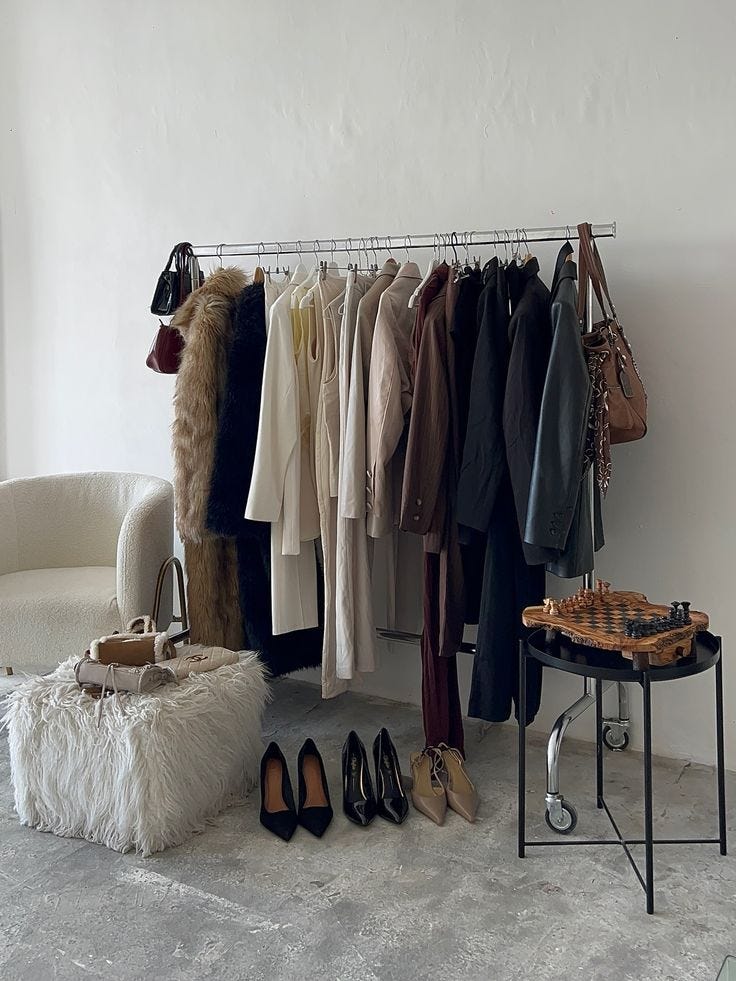
Most people are dressed. Very few are put together.
For some, that’s intentional. They don’t care how they look, they just need something to wear. Others tell themselves they don’t have the time, that they’re too busy, too tired, or at a stage in life where dressing good no longer matters. Some are afraid of standing out. Others are convinced that looking put together requires expensive clothes, insider knowledge, or a wardrobe overhaul.
They’re wrong. Wrong. And very wrong.
Being put together is not contingent on money, time, or obsessing about fashion at all. It’s not about trends either, those change all the time. It’s about intention. And intention is a social signal people respond to, often without realizing it.
This is a universal guide for every single person because everyone is constantly being perceived, very few people take control of it.
The Rule of Seven
To look put together, you need a system. Not a checklist of items to buy, but a mental model for how to dress. Stylists refer to this as the Rule of Seven.
Every piece you wear carries visual weight. The goal isn’t to reach the highest score possible, it’s to hit the “sweet spot” where an outfit feels finished and not busy.
The Scoring System
In this model, we assign points based on visual “volume” with each piece receiving either:
The Basics (1 Point): These are your foundations. A plain white tee, a leather belt, or sneakers. Essentials, solid colours, normal silhouette.
The Statements (2 Points): These are the pieces that demand a second look. A patterned overshirt, a textured knit, bold sunglasses, or shoes with a distinct silhouette.
It’s important to note that the points are subjective. For the minimalist, a specific white t-shirt might be a two because of its heavyweight grain or a unique boxy silhouette that defines the entire look. For someone else, that same shirt is just a base layer, a one.
Context also shifts the weight. A patterned button-down might be a two when worn casually to dinner, acting as the centrepiece. But place a structured blazer over it for a formal event, and that same shirt might recede into a one, becoming part of the background to let the tailoring speak. You are the final judge of how much “space” a piece occupies in your specific narrative.
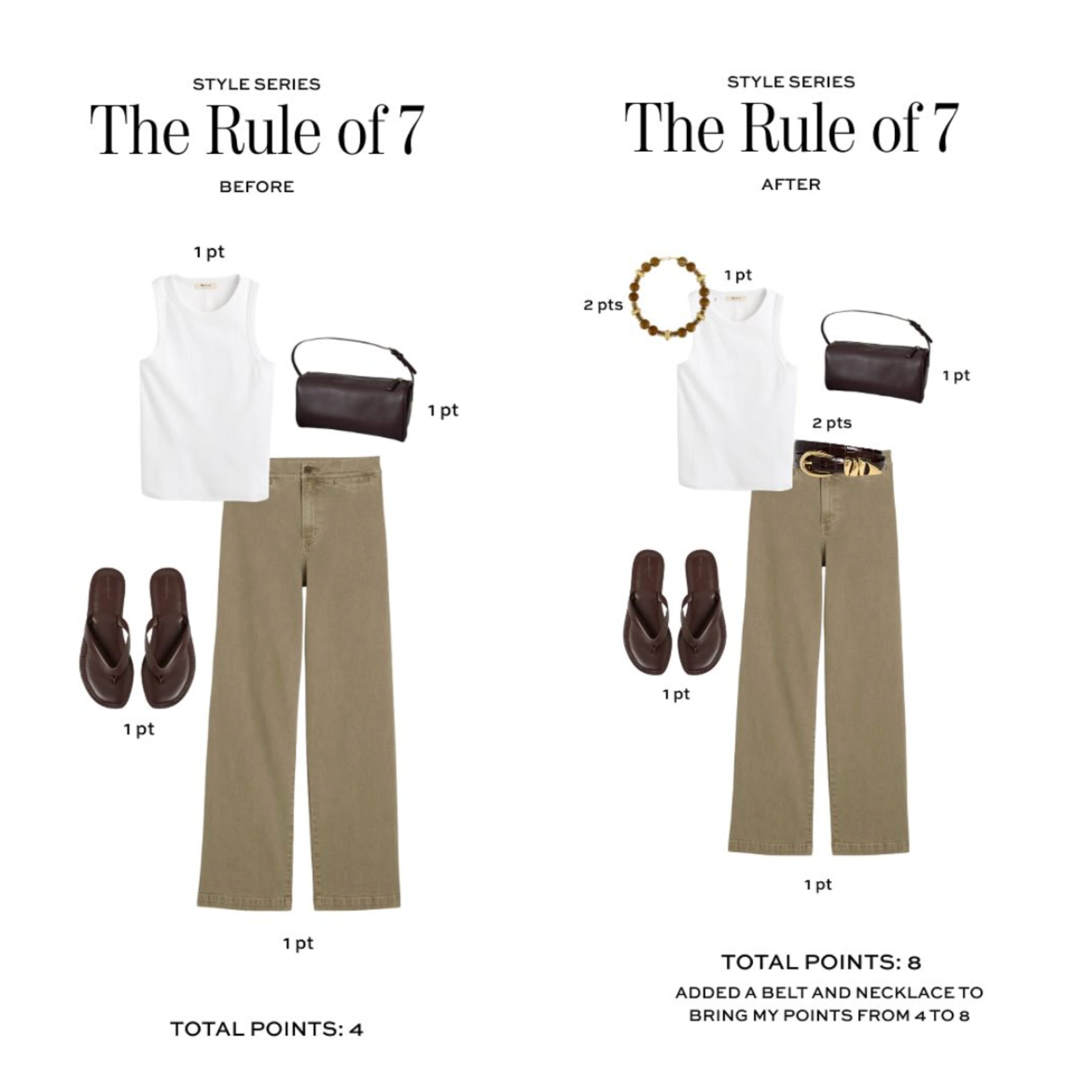
The Objective: 7 to 10 Points
The magic happens when you land between seven and ten points.
If you’re sitting at a four or five, you’re just “dressed”—you look fine, but you don’t look intentional. If you push past twelve, you’re likely becoming “noisy.” You start to look like the clothes are wearing you, rather than the other way around.
The Rule of Seven teaches you that looking put together is often about the art of restraint. It’s about understanding that a silver ring or a specific pair of socks isn’t just an accessory; it’s the final point that tips the outfit from “incomplete” to “finished.”
The goal isn’t to stack pieces for the sake of it, it’s to balance them. When you hit that seven-point threshold, you’ve signalled to the world that every choice was deliberate. You’ve moved from a random collection of garments to a harmonised look.

Playing the Part
The Rule of Seven already puts you ahead of most people. But there’s one final layer that can elevate you even further: confidence in yourself. It’s not only about the clothes. It’s not about showing off or being loud. It’s about believing in yourself and carrying that assurance naturally.
Close your eyes for a moment and imagine someone who is truly put together. You don’t notice the labels or the details first — you notice that they seem completely at ease, like they belong in what they’re wearing. That ease comes from confidence – not from their outfit.
When you combine the Rule of Seven with that confidence, you become unstoppable. You look intentional, complete, and unmistakably put together. Clothes signal care; confidence signals command. Do both, and people take notice — even before you say a word.
You are right as right can be
This is actually really helpful. Thank you.